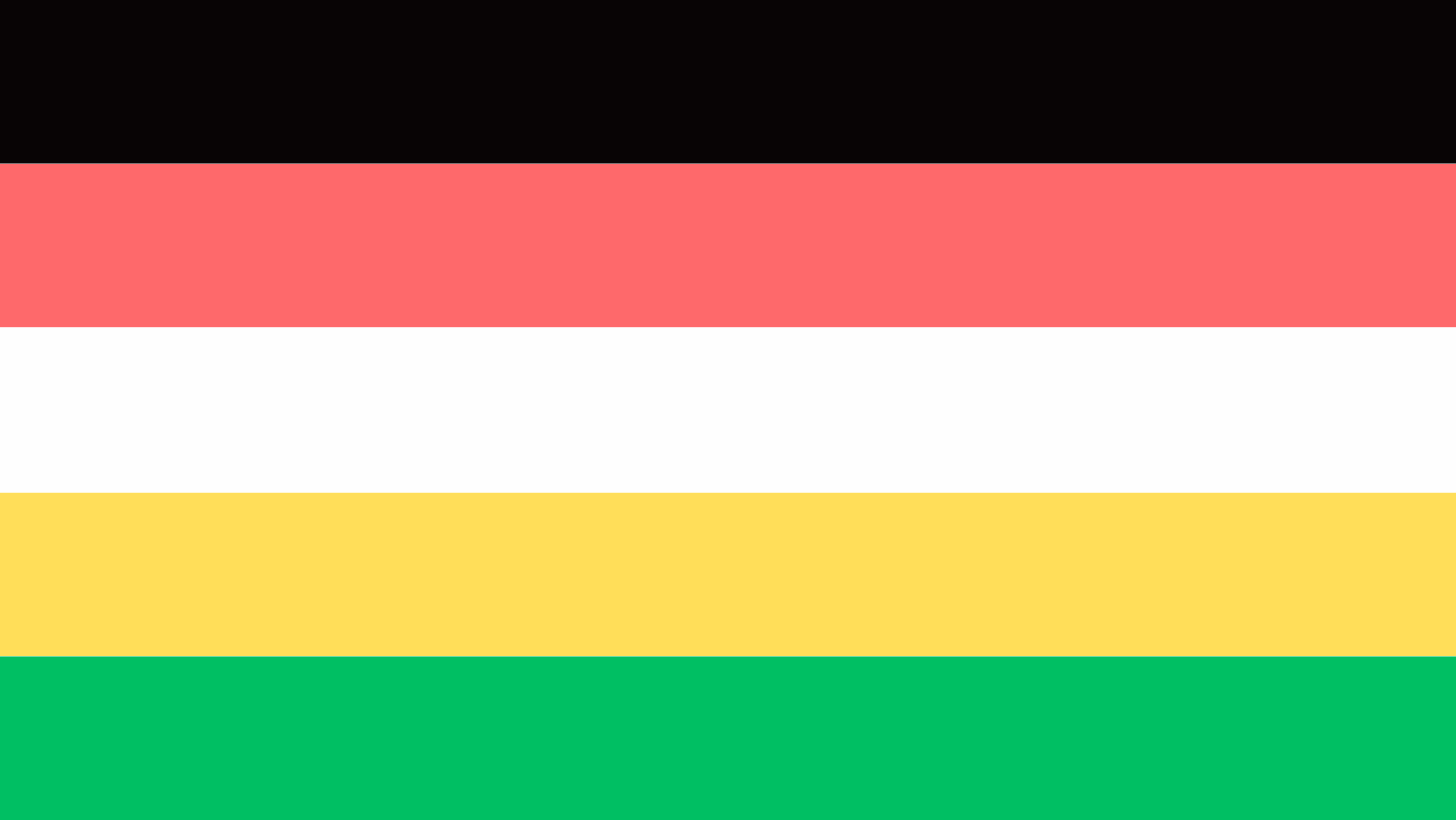
A different colored flag and the humility it takes to understand it.
The road is not inclusive; it is narrow, and few find it.
If we were to assign each of the seven deadly sins to a month of the year, perhaps it would look like the list below:
January is envy month.
February is lust month.
March.
April is wrath month.
May.
June is pride month.1
July is sloth month.
August.
September.
November is gluttony month.
December is greed month.
Keep in mind that pride has historically been considered the most severe of the deadly sins.
It is a root sin from which the others grow. Pride is a rebellion against God because it is the exalting of self and the refusal to be corrected. It is the fall of Lucifer and the birth of all evil we know.
Pride takes credit where it is not due. It resists authority that tries to control what the individual will not restrain. It refuses any boundaries or limits. It does not allow for the possibility that a held viewpoint might be wrong. It refuses any correction or discipline. It ultimately blinds judgment, particularly moral judgment, so that sin no longer exists and, therefore, repentance and a contrite heart are unnecessary. It redefines evil to be good for the purpose of elevating self. A proud heart cannot receive grace (for there is no need for grace in someone so proud as to depend on or listen to no one) and completely shatters any relationship with God.
Pride says, “I did this on my own, I am this way and don’t need to change, I am great, I am brilliant, I am the one you should look to, I am strong enough, I am the master of my fate and the captain of my soul!” Ultimately, knowing God calls Himself the I AM, we grab that and apply it to ourselves. God is out on the periphery, the one we shake a fist at if things go badly.
In my fictional list above, the only month that actually exists is Pride Month. Of the deadly sins, we actually celebrate the worst.
The seven deadly sins put a name to disordered desire; their counterparts are the seven “heavenly virtues,” traditionally paired as their opposites.
Instead of pride, there is humility.
Instead of greed, there is generosity.
Instead of lust, there is chastity.
Instead of envy, there is kindness.
Instead of gluttony, there is temperance.
Instead of wrath, there is patience.
Instead of sloth, there is diligence.
Instead of a self-centered, inwardly focused, and excessive approach, the virtues emphasize self-control and service to others. They are expressions of waiting, of patience and consistency, of giving instead of receiving, of telling ourselves no.
But unlike the seven deadly sins, the seven heavenly virtues do not sell products, they do not bring personal fame and influence, they do not help you get ahead, they do not get clicks, and they are not rewarded quickly—if at all—in this life.
“JOY is Jesus, others, and then yourself,” my mom would remind me as a child, putting the world in proper order for me. It is only in that order that pride is reversed. Humility isn’t false modesty; it is actually seeing reality and our place in it.
I have learned she was right; when self consumes me and I put me first, my thoughts run dark. The simple act of first asking Jesus for help and then doing something for someone else changes everything. A letter in the mail. Fresh-baked cookies as a gift. An encouraging text out of the blue. Anything but self. I have also learned that, when life is in that order, pride does not thrive.
But then the month of June arrives.
I have always dreaded June, though it’s a shame because it’s when the lilacs and early summer flowers are blooming. I dread traveling during the month because it has come to mean, in the last fifteen or so years, a celebration of evil wrapped up in a rainbow.
God’s promise not to destroy with a flood, the symbol of His promise of divine mercy, protection, and faithfulness, of His holiness and care, of judgment into peace, now painted on the streets and in corporate media logos and hanging from awnings to turn it into a celebration of pride that pretends to be celebrating love.
Love of self, to be sure, but not of virtuous love.
Not only do we steal away God’s I AM and make it ours, but we also see that He says He is Love; so we take that holy nature and slap it onto something wholly unlike him. It’s beginning-grade Garden-of-Eden stuff, making ourselves into God.
I was recently in Massachusetts, and it was difficult to stand on the Lexington Green and take in what happened there— on this, the 250th birthday of the nation—reading the prayers and proclamations on the stone memorials, only to look across the street at the church with its Pride flag.
A church, celebrating Pride, pretending it was about love. How Lucifer must laugh.
God mocks and opposes the proud, but shows favor and kindness to those who are humble (Proverbs 3:34, James 4:6). Those who proudly rebel against God in celebration of pride—even a church parked on the literal corner of American history—will discover what it is like to be on the receiving end of God’s rebellion against them.
Pride usually starts from a genuine feeling, one that we don’t rightfully direct quickly enough. We’re proud to be an American. We’re proud of our hometown school. We’re proud of our sports team. We’re proud of our kids. Is that wrong?
Put all expressions of pride into alignment with God’s word (1 Corinthians 1:31, 2 Corinthians 10:17-18, and Philippians 3:3), where our confidence is in Him instead of humans.
A better expression might be that I am thankful.2 I’m so glad I get to be a part of events, of places, of teams, and of moments in which something wonderful happens. It brings me joy (JOY) if it’s in the proper order, but it brings on the other deadly sins if it is disordered. I want to always shift quickly towards being thankful to God, and then remember that I must be a good steward of all the things He’s blessed me with, so I can share them with others.
I didn’t get lucky.
I didn’t make it happen.
It’s not about my personal achievements.
My talents weren’t of my own creation.
If I ran fast, God gave me the legs and the lungs; if I wrote something of value, God gave me the ideas. I cannot let it be about me. I am gladly dependent—and relieved—to place it on the Creator of the universe, confident in God.
So let me tell you about a different, colorful flag to think of this June, when the world is screaming about pride, love, and inclusivity, when it is anything but. It’s a flag that started as a book, a Wordless Book, that I learned about in Sunday School as a small child.
Black is the sin that separates all of us from God (Romans 3:23). Red is the blood of Jesus that he shed on the cross to forgive our sins (John 3:16). White is the cleansing and forgiveness of that sin (Psalm 51:7). Gold reminds us of Heaven and of God’s holy glory that we will live in someday (Revelation 21:18). And green represents the spiritual growth and a life in Christ in the here and now (2 Peter 3:18).3
There is no celebration of pride in this flag.
Pride month celebrations grow each year, in step with our pride in human ability and the idea that we can accomplish anything and everything on our own, without God, thinking through us all things are held together (Colossians 1:17). In June, the walls and buildings are painted and lit up to celebrate “love” and the roads are filled with millions of people around the world screaming and writhing in pride. The way of pride is broad and crowded, well-lit and full of music and glitter. It sparkles and captivates, feeding every temporary thing.
The road to life is much narrower. There aren’t as many on it. Don’t be proud that you’re not on the broad road. Be thankful God showed you mercy.
It could also be lust month, considering some of the parades.
This is not the humble-brag “I’m so blessed” nonsense we see online, where people make sure everyone knows about their wealth, success, and possessions while still trying to be humble.
Classic Christian rock group Petra had their own colorful version in “The Coloring Song.”